

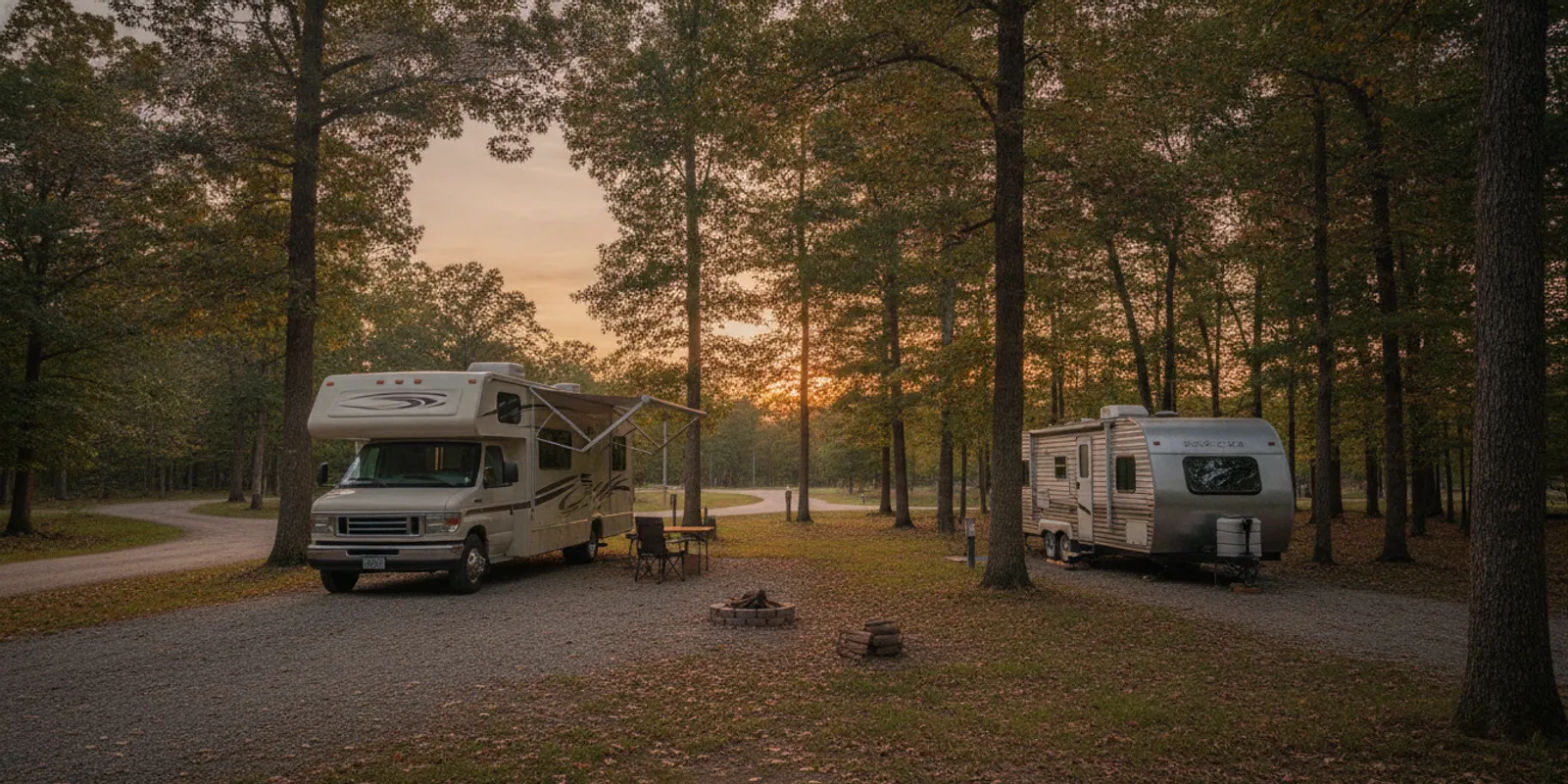
Choosing between a motorhome and a towable RV affects more than where you sleep. In this Class C vs travel trailer comparison, the useful question is how each style fits your driving, campsite routine, storage needs, and the vehicle you already own. Neither is automatically easier or less expensive for every household. Start with the trips you expect to take, then compare the work each setup asks you to do before, during, and after the drive.
Call to ask about the RV department
For recreational inventory, browse Brown's Guttenberg RV, the separate storefront for RV and pontoon shopping. Availability and details vary by unit, so use the specific listing and confirm what is included before making a decision.
What is the basic difference between a Class C and a travel trailer?
A Class C motorhome combines the living area and driving vehicle in one unit. The cab and living space are connected, and the motorhome travels under its own power. At a destination, you park the whole vehicle and use the living area where it sits. The exact layout, equipment, sleeping capacity, and storage differ from one floor plan and model to another.
A travel trailer is a separate living unit pulled by a tow vehicle. The trailer attaches to a compatible vehicle for travel, then can be unhitched at a campsite if the site and equipment allow. The tow vehicle and trailer are two separate vehicles with separate specifications. A trailer's advertised sleeping count does not tell you whether its beds, dinette, or bunk arrangement will be comfortable for your group.
This basic distinction shapes the whole trip. With a motorhome, you drive the RV itself. With a trailer, you drive a combination of tow vehicle and trailer, then may be able to use the tow vehicle separately after setting up camp. Either arrangement involves planning, practice, and careful attention to the vehicle and RV manufacturer's limits.
How do driving and travel days compare?
A Class C can feel familiar to someone comfortable driving a larger vehicle, but it is not the same as a car or pickup. Its height, length, turning path, rear overhang, and visibility can affect route choices and parking. Before setting out, learn the actual dimensions and weight for the specific motorhome. Check bridge and clearance signs, parking restrictions, and the route's tight turns. Do not assume a navigation app accounts for the RV's height or length.
A trailer adds a second unit behind the tow vehicle. The combination needs more room to turn, and the trailer follows a different path through a corner than the front of the tow vehicle. Drivers should practice starting, stopping, turning, backing, and checking mirrors in a large, quiet area before a busy travel day. A spotter can help when backing, but agree on clear hand signals and stop if the driver cannot see the spotter.
Neither style removes the need for rest and route planning. Think through fuel and meal stops, where a long vehicle can park, overnight options, weather, and the time needed to reach a campsite. If you are new to either format, plan a shorter first outing with a straightforward route and roomy site. A low-pressure practice trip can reveal whether the driving experience suits you before you plan a longer journey.
Driving questions to answer before you choose
- What is the full length, height, and width of the unit, including accessories that affect clearance?
- Are you comfortable with the driver's seat, mirrors, sightlines, and controls on a test drive or walk-through?
- For a trailer, what is the tow vehicle's actual configuration and what do its manuals say about towing and payload?
- Can you plan a route that avoids low clearances, narrow roads, and destinations without suitable parking?
- Who will drive, and does that person have a safe place and enough time to practice?
Do not judge tow compatibility from a model name, a general online estimate, or the trailer's empty weight alone. Exact vehicle equipment and loading matter. Brown's Guttenberg Ford has educational information about trailer details for an F-250 search and F-250 towing equipment and capability. These are vehicle-specific reading, not a confirmation that a particular vehicle can tow a particular trailer. RV shoppers should use Brown's Guttenberg RV for recreational inventory and check the actual tow vehicle and trailer documentation together.
What changes when you tow a travel trailer?
Towing adds a compatibility check that a motorhome shopper does not face in the same way. First identify the exact tow vehicle, its engine and equipment, and the relevant ratings in the vehicle documentation. Then review the trailer's fully loaded weight, tongue weight, cargo capacity, and hitch requirements. People, pets, luggage, tools, water, and installed accessories all contribute to what the tow vehicle carries or pulls. A trailer that appears light when empty may be substantially heavier when ready for a trip.
Pay attention to payload as well as a headline towing figure. Payload is the available capacity for the load carried by the vehicle, which can include passengers, cargo, hitch load, and other equipment. The vehicle's own label and manuals are important; a brochure number does not account for the specific vehicle's configuration or the load you plan to carry. Trailer weight distribution and hitch setup matter too. When any number or specification is unclear, ask a qualified professional to help interpret the documents before you travel.
A motorhome has its own loading limits. The people and belongings inside it count toward its capacity, and storage compartments have limits that can differ. The motorhome also needs to be operated within its listed weight and tire requirements. A self-propelled RV is not a workaround for loading beyond a vehicle's capacity.
For a trailer, also consider the towing equipment and the practical handling of the combined rig. The hitch type and setup must suit the vehicle and trailer. Mirrors need to provide a usable view around the trailer, and lights and connections should be checked before each trip. Never treat a successful short drive as proof that a combination is within its ratings. Verify the specific numbers and follow the owners' manuals.
What is campsite setup like for each style?
A Class C's main advantage at arrival is that its living space is already part of the vehicle. You position and level the motorhome, connect utilities if the site and unit support them, and set up any needed outdoor items. You do not have a separate trailer to unhitch. However, campsite setup still requires learning the unit's systems and checking site fit. A motorhome that is too long or tall for a particular site can make arrival difficult, even if the campground has open spaces.
A travel trailer requires connecting and towing before the trip and unhitching at the campsite when you want to leave the trailer in place. Setup can include stabilizing and leveling the trailer, securing the hitch, arranging utilities when available, and checking the surrounding space. This involves additional steps and equipment, and those steps need to be performed correctly. Some travelers appreciate having a separate tow vehicle to run errands after setup; others find hitching, unhitching, and backing into a site an unwelcome task.
Campground details can matter more than the broad RV category. Check the pad dimensions, access road, turning space, slope, overhead branches, and the location of utility connections. Confirm whether the site accommodates your entire rig, not just the living unit. If you travel with a trailer and tow vehicle, ask how the campground handles parking for both. A site description or reservation alone is not a substitute for measuring your own equipment and confirming specific constraints.
| Consideration | Class C motorhome | Travel trailer |
|---|---|---|
| How it travels | The living area is driven as one motorized vehicle. | A separate tow vehicle pulls the living unit. |
| Vehicle planning | Review the motorhome's driving dimensions, loading, and operating requirements. | Match the exact tow vehicle, hitch, and loaded trailer within all applicable ratings. |
| Arrival routine | Park and set up the motorhome; no separate trailer to unhitch. | Back into position, unhitch, stabilize, and arrange the tow vehicle. |
| Local trips after setup | Moving the motorhome means taking the living vehicle along or arranging other transportation. | The tow vehicle may be available separately after the trailer is parked. |
| Storage planning | Find a suitable place for one motorized RV, including height and length clearance. | Plan for both trailer storage and a tow vehicle, whether kept together or separately. |
| Maintenance planning | Account for the motor vehicle and the RV living systems. | Account for the tow vehicle and the trailer, including hitch and trailer systems. |
| Best next check | Inspect the actual floor plan, driving position, dimensions, and capacities. | Verify tow compatibility and practice hitching, backing, and campsite setup. |
How should you compare sleeping capacity and living space?
Start with the people who will actually travel, not the largest sleeping number in a listing. Ask where each person sleeps, whether the bed is a fixed bed or a converted dinette, and what must be moved or folded to use the living area. A space that sleeps a certain number may still feel cramped when everyone is inside during rain or at bedtime. Consider ages, mobility, privacy, and whether people keep different schedules.
Floor plans can make two units in the same broad category feel very different. Look at bed size and access, aisle width, seating, bathroom location, kitchen workspace, and the route from the entry to each sleeping area. Open doors and storage compartments during a walk-through. Sit in the seats and imagine a normal evening: Where do coats go? Can one person prepare a meal while another moves through the space? Is there a convenient place for children or gear without blocking an exit?
A motorhome may combine a cab area with the living space, while a travel trailer arranges its living area in a separate body behind the tow vehicle. Neither description guarantees a particular bed layout or amount of usable room. Review the floor plan for the exact unit and inspect it in person where possible. Ask how any convertible bed is made and what furnishings must be cleared before it can be used.
For longer trips, the day-to-day layout may matter more than a one-time sleeping count. A household that spends most daylight hours outside may want a simple interior and easy gear access. Travelers expecting to work or wait out weather inside may prioritize seats, lighting, outlets, and room to move. These are personal fit questions; a checklist and a careful walk-through are more useful than assuming one RV type always has more space.
Which one works better for storage and daily use?
Compare where belongings will go and how often you need to reach them. Look at interior cabinets, exterior compartments, closets, pantry space, and the location of items used during travel. Do not confuse a large-looking storage bay with unlimited capacity. Check its dimensions, weight limits, access, and whether the items you plan to carry fit without blocking required equipment or overloading the RV.
A motorhome can keep driving and living functions together, but it also means the living unit moves whenever you take the vehicle somewhere. Some travelers are comfortable planning the day's outings around the motorhome. Others may prefer to arrive, park the trailer, and use the tow vehicle for local errands. A trailer can offer that separation, but it brings the trailer and tow vehicle as two pieces of equipment to store, maintain, and position.
Storage at home is an important early question. Measure the intended space, including the route in and out, gates, overhead clearance, and room to connect or turn. Check local rules or property restrictions that apply to where you plan to keep an RV. If the unit will be stored away from home, factor in the practical steps of retrieving it, preparing it, and returning it between trips. Avoid deciding based only on a listed exterior length; allow room for access and maneuvering.
Think about what stays packed in the RV and what you will load each time. A consistent packing list can reduce forgotten basics, but it is still important to keep the load within capacity and secure belongings for travel. Heavy items should be placed and secured according to the vehicle or RV guidance. Keep access to safety equipment clear. A neat storage arrangement is convenient only if it also respects weight limits and does not create hazards.
What should you expect for maintenance and ownership planning?
A Class C combines a motor vehicle with an RV living area. That means ownership planning includes the chassis and powertrain maintenance specified for the vehicle, along with the inspection and care of the RV's appliances, plumbing, electrical systems, seals, and other equipment. Which items apply and how often depends on the exact unit, components, usage, and manufacturer guidance. Keep the manuals and service records together, and ask the seller which records or operating instructions are available for the specific RV.
A travel trailer has no engine of its own, but it is not maintenance-free. The tow vehicle needs its normal maintenance and must remain suitable for the load. The trailer has its own tires, brakes, lights, hitch components, appliances, water and electrical systems, seals, and other features to inspect or maintain according to its manuals. The tow vehicle's service plan does not cover the trailer's living systems, and trailer upkeep does not replace maintenance on the tow vehicle.
For both styles, ask for a clear walk-through before taking a trip. Learn how to operate the installed systems, what power sources they use, what limits apply, how to secure the unit for travel, and what to do when a warning or leak appears. Confirm which accessories are included in the sale and which are not. If you are not sure how a system works, ask for an explanation rather than experimenting on the road or at a campsite.
Budgeting is also unit-specific. Compare the actual asking price and included equipment, then consider likely costs such as insurance, registration, storage, fuel or towing-related use, campground stays, and maintenance. The mix will vary by RV, travel frequency, local requirements, and how you use it. Do not assume one type is always cheaper to own: a motorhome's vehicle and living systems are combined, while a trailer owner plans for both the trailer and the tow vehicle.
Questions to ask when inspecting a specific RV
- What are the unit's exact dimensions, weight information, and load limits?
- Which appliances, accessories, and systems are included, and can someone demonstrate their operation?
- Are manuals, maintenance records, and available inspection information provided for this unit?
- What visible wear, damage, odors, leaks, or repairs should be discussed before purchase?
- For a trailer, what hitch equipment is required, and have you verified the combination with the tow vehicle's documentation?
- What is the process for confirming availability, price, and any unit-specific details before traveling to see it?
A careful inspection should be specific to the RV rather than based on a category label. If you are not qualified to evaluate a system or structural concern, consider asking an appropriate professional to inspect it. Make sure questions and agreed details are answered in writing before you commit. A checklist helps you compare units consistently, but it cannot substitute for the actual unit's condition, documents, and applicable terms.
How can you make a fair comparison before shopping?
Use the same trip scenario for both types. Picture a typical weekend or vacation, including how many people travel, how far you drive, the kinds of roads you use, where you stay, and what equipment comes along. Then estimate how you would manage a rainy day, an unplanned stop, and a late arrival. This puts the decision in context instead of treating the choice as a contest over one feature.
- Write down the travelers and sleeping needs. Note the number of regular travelers, bed preferences, privacy needs, and any mobility considerations.
- List likely destinations and routes. Consider site size, road access, driving distance, and whether you want a separate vehicle available at camp.
- Check the vehicle plan. For a Class C, consider driving and storage requirements. For a trailer, identify the exact tow vehicle and verify every relevant rating and hitch requirement.
- Compare the daily setup. Decide whether you would rather park one motorized unit or manage the connection and separation of a tow vehicle and trailer.
- Inspect storage and living layout. Walk through the floor plan and check the actual compartments, not just a brochure drawing.
- Plan ownership tasks. Review the manuals, maintenance responsibilities, storage options, and costs that matter for the specific units.
- Ask to confirm the details. Check availability, equipment, condition, and price for each individual RV before making a trip or a decision.
You can also weigh each priority rather than trying to find a universal winner. For example, score driving comfort, access to a second vehicle, sleeping layout, campsite setup, home storage, and maintenance workload from one to five. Give the most important items greater weight. A score is only a way to organize your preferences; it is not a substitute for checking the technical requirements or inspecting an RV.
Brown's Guttenberg Ford's used F-250 and RV shopping guide offers a vehicle-side perspective for people thinking about a truck and RV combination. It does not establish that a particular F-250 or any other vehicle can tow a specific trailer. Confirm that question using the exact vehicle and trailer documents. For RV listings and recreational shopping, use the separate Brown's Guttenberg RV storefront rather than an automotive vehicle inventory page.
Which RV style might fit your plans?
A Class C may be worth a closer look if you want the driving vehicle and living space combined, prefer not to hitch and unhitch a separate trailer, and are comfortable driving a larger motorized unit. Check how it handles, where you will store it, and whether the floor plan works for your travelers. Think through local errands too: if you want to leave camp in a smaller vehicle, consider how you would arrange that on the trips you actually take.
A travel trailer may fit if you want the living space to remain at camp while the tow vehicle is available for local use, and you are prepared to match the trailer to a suitable tow vehicle. The trade-off is the additional towing, backing, hookup, and campsite routine. Before you focus on floor plans, establish which vehicle could safely tow the loaded trailer and confirm the details with the applicable documentation.
Either could be a poor fit if its dimensions exceed your storage space or the places you plan to visit, if the driving or setup feels uncomfortable, or if the capacity and condition do not match your needs. It is reasonable to pause, compare a different layout, or revisit the decision after more research. The aim is not to buy the largest unit or the one with the longest feature list; it is to choose equipment you can operate, store, maintain, and enjoy.
If you are considering an F-250 as a tow vehicle, review the exact equipment and trailer requirements rather than relying on a model name or general towing statement. Brown's Guttenberg Ford's towing articles can help frame the vehicle-side questions, but they are not a unit-specific tow approval. Keep the recreational search focused on the RV itself, its documentation, and Brown's Guttenberg RV's available listings.
For a next step, open the Brown's Guttenberg RV storefront to review recreational inventory. When an RV catches your eye, compare its layout and actual specifications with your trip checklist, confirm availability and unit details, and ask any unanswered questions before traveling to see it.
Explore RV inventory at Brown's Guttenberg RV
How do trip length and travel style affect the choice?
Think about how often you expect to change campsites. A motorhome's connected living space can make frequent travel stops feel straightforward because the vehicle and interior move together, but every move means driving the whole unit and finding a suitable place to park it. A trailer requires managing the tow vehicle and the separate RV each time you move, including hitching and departure checks. The way you travel matters: a multi-stop itinerary has a different rhythm from a week spent at one campground.
For a short weekend, consider whether time spent hitching, setting up, and packing away would feel like part of the fun or a chore. For an extended trip, ask how you will handle groceries, laundry, weather delays, and longer periods indoors. If one person does most of the driving or campsite setup, make sure that person is comfortable with the workload. If several people can share tasks, agree in advance who checks connections, guides backing, and confirms that the unit is secure for departure.
Travelers who visit several destinations may value a different balance from travelers who return to the same campground each season. On a long stay, a trailer can remain parked while its tow vehicle is used locally. A motorhome traveler may appreciate having the living area with them at stops, but will need a plan for local transportation after parking. Neither arrangement guarantees less work; each moves the work to different parts of the trip.
Make a realistic itinerary and write down the transitions: loading at home, driving, arriving, setting up, day trips, breaking camp, and returning home. How many of those transitions does each option add for you? Include the people who will travel, not just the driver. This exercise can uncover a mismatch early. For instance, someone who dislikes backing into tight spaces may need ample practice and carefully selected sites with a trailer, while a motorhome shopper may need to build confidence in height awareness and maneuvering a larger vehicle.
How should you compare the costs without guessing?
Compare individual units on the same terms, not a broad claim that one RV type costs less. Start with the asking price and clarify which equipment is included. Then list the expenses you expect to face over the period you plan to own it. Depending on the unit and your situation, the list may include insurance, required registration, storage, routine maintenance, repairs, fuel, campground fees, and equipment or accessories you still need. Actual expenses vary, so ask for unit-specific information and obtain estimates that apply to your own plans.
Fuel is part of the travel budget for either arrangement, though the amount and type of use differ. A Class C uses fuel to move the motorhome and its contents. A trailer is pulled by a tow vehicle, and towing changes how that vehicle is used. Your route, load, driving conditions, vehicle, trailer, and travel habits all matter. Do not use a single generic fuel estimate as a promise of what your trip will cost. Use a conservative plan and leave room for changes to the route or schedule.
Ownership costs also include the time and effort you spend. A trailer owner should plan to inspect and maintain both the trailer and tow vehicle. A motorhome owner should plan for its vehicle systems and living systems. Either RV may need repairs, and a component's age, condition, service history, use, and availability can affect the experience. Ask what maintenance records are available, what work has been done, and what the seller can document. When assessing a used unit, distinguish confirmed records from verbal assumptions.
For a fair comparison, make two columns and use the same ownership period, travel frequency, and storage assumptions in both. Mark which numbers are known, which are estimates, and which need confirmation. Include the cost of a suitable tow vehicle if you do not already own one; do not treat that vehicle as a free part of a trailer setup. Conversely, do not overlook the ongoing needs of a motorized unit simply because it combines the vehicle and living area in one purchase. If a quote or fee is unclear, ask for a written breakdown before deciding.
What safety and preparation checks belong on the list?
Safety preparation starts with the exact unit and its instructions. Learn the weight and dimension information, tire requirements, loading limits, and any operating procedures supplied by the manufacturer. Check that items are secured for travel, required lights and connections work, and the doors and compartments are closed. A pre-departure routine helps make checks consistent rather than relying on memory, especially when you are excited or leaving in a hurry.
For a travel trailer, include the hitch connection, safety equipment and breakaway components required for that setup, lights, tires, mirrors, and the load inside the tow vehicle and trailer. Follow the vehicle and trailer manuals, and have an appropriate professional explain any unfamiliar hitch or brake system. A driver should know how the combination behaves under braking and turning before entering busy traffic. Practice in a controlled area and avoid using public roads as a first lesson.
For a motorhome, learn its height, width, length, turning clearance, and how its systems are secured for travel. Review the proper passenger seating and restraint instructions. Before a trip, check the tires and the vehicle's warning indicators and follow its maintenance schedule. When the unit is stopped, use appropriate precautions before connecting or disconnecting utilities. If you have a safety or recall question, consult the National Highway Traffic Safety Administration's vehicle safety resources and the specific vehicle or RV manufacturer documentation.
Both styles benefit from a written walk-around routine. Check the area around the unit before moving, confirm that people and pets are in a safe place, and use a spotter where helpful. A spotter cannot remove the driver's responsibility to stop when visibility is lost. Learn the unit's emergency exits, fire-safety equipment, and any installed system-specific instructions. These are practical preparation topics, not a substitute for the manuals, training, or professional guidance appropriate to your vehicle and RV.
Frequently asked questions
Is a Class C easier to drive than a travel trailer?
Not for everyone. A Class C is one motorized vehicle, while a trailer combination requires towing and managing a second unit. A motorhome still has greater size and clearance considerations than many everyday vehicles. The better fit depends on your driving experience, the exact dimensions, and whether you are willing to practice the relevant skills.
Can I tow a travel trailer with the truck I already own?
Possibly, but do not decide from the truck's model name or a general towing number. Check the exact truck configuration, its manuals and ratings, the trailer's loaded weight and tongue weight, payload, hitch requirements, and the load of passengers and cargo. If you cannot verify the match, ask a qualified professional before towing.
Can I use a Class C's living area while it is moving?
Follow the motorhome manufacturer's instructions and applicable safety requirements. Do not assume that a seat or living-area feature is safe to use while the vehicle is moving. Occupants should use designated seating and restraints as directed by the manufacturer and law.
Which style has more sleeping space?
There is no reliable answer based only on the RV category. Floor plans vary, and a listed sleeping capacity may include converted seating. Compare the specific beds, dimensions, access, privacy, and daily living arrangement for the unit you are considering.
Where can I look at RVs for sale?
Brown's Guttenberg RV has a separate storefront for recreational inventory. Check the individual listing and confirm the specific unit's current availability, equipment, and details with the store.
The right choice is the RV that fits your routes, tow or driving setup, campsite habits, storage, and capacity—not a category that is best for everyone. Compare actual units carefully and verify their specifications before you plan your first trip.