

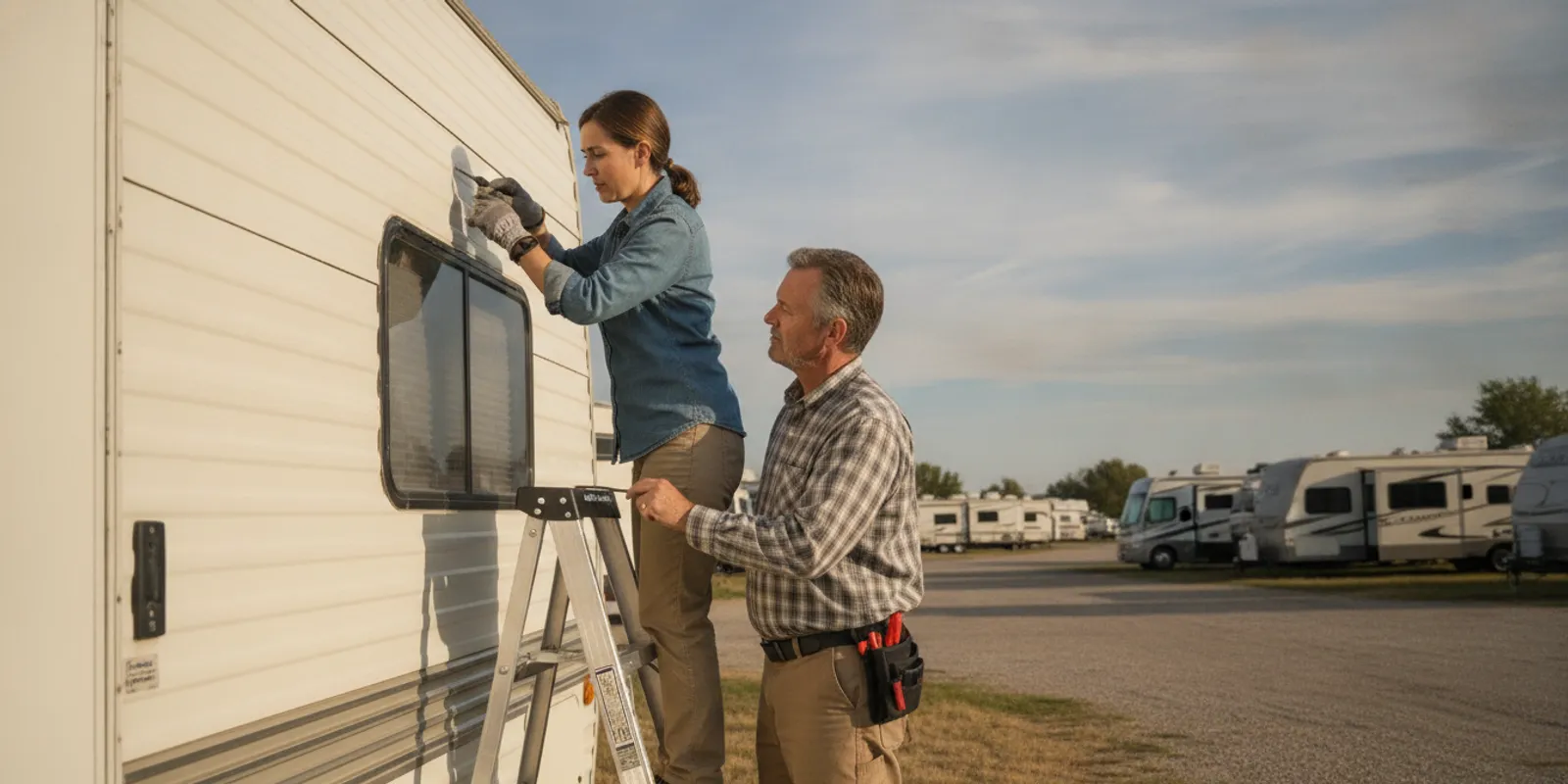
A used travel trailer can look clean and ready for the road while still needing careful review. This used travel trailer buying guide walks through the structure, roof, seals, appliances, systems, tires, hitch, records and professional inspection so you can ask useful questions before making a decision.
Contact Brown's about your shopping questions
How should you prepare before looking at a trailer?
Start with the way you expect to travel, not with a floor plan photo or a low advertised price. Make a short list of the people who will travel with you, the things you need to carry, the places you want to go and the vehicle you expect to tow with. A trailer that fits the driveway but exceeds the tow vehicle's ratings is not a suitable match. A trailer that fits the tow rating but lacks the sleeping, storage or bathroom arrangement you need may not work for your trips either.
Write down the tow vehicle's exact year, make, model, engine, drivetrain, cab and installed equipment. Towing and payload ratings can vary across versions of the same model. Use the vehicle's owner information and door-jamb labels rather than relying on a general model description, an online estimate or a salesperson's memory. If you do not yet have a tow vehicle, compare the trailer's documented weights with the specifications of vehicles you are genuinely considering before committing to either purchase.
Decide which features are essential and which are optional. For example, list the number of fixed beds you need, whether you want a slide-out, how much pantry or closet space matters, and whether you expect to use the trailer with electrical hookups or away from them. Features can add weight, complexity and repair considerations. A longer trailer may provide more living area, but the length also affects where you can park, turn and camp. Do not assume that a particular floor plan or size will suit every trip.
Set a total budget rather than comparing only the asking prices. Include any inspection, registration, insurance, hitch equipment, tow-vehicle changes and repairs you may need. Ask how the stated price is calculated and what costs are separate. If you are trading a vehicle as part of your plans, learn how the appraisal process works and whether you want a trade or a separate sale. Brown's provides separate vehicle trade-in and vehicle sale information; those pages concern vehicles, so ask the relevant seller directly whether any transaction applies to a travel trailer.
Which documents and weight ratings should you verify?
Before judging a trailer by appearance, ask to identify the exact unit and review the documents that go with it. Match its vehicle identification number (VIN) on the trailer to the title and other available paperwork. If the numbers do not match, are hard to read or raise questions, pause until the seller explains the discrepancy and the paperwork is checked. Confirm who is authorized to sell the trailer and what documents will be provided at the time of sale. Requirements vary by situation, so do not assume that a photo of a title or a registration card alone settles ownership or transfer questions.
Ask for the owner's manuals, appliance manuals, maintenance receipts, repair invoices and any records of water intrusion, roof work, collision repairs or component replacement. These records can help establish what was done and when, but they are not proof that a component is currently working or that no other issue exists. Note any time period between a repair and the present, and ask whether the work has been checked since it was completed. If records are missing, treat that as an unanswered question rather than assuming the trailer has no history.
Locate the manufacturer's weight and capacity labels and compare the information with your tow vehicle's ratings. Important figures may include the trailer's unloaded weight, gross vehicle weight rating (GVWR), cargo carrying capacity, axle ratings and hitch or tongue-weight information. The name and placement of labels can vary. The trailer's current weight can differ from its original unloaded figure after water, propane, batteries, accessories, cargo or repairs are added. Ask how a listed weight was measured, and consider getting the loaded trailer weighed before travel.
Check the tow vehicle's gross vehicle weight rating, gross combined weight rating, axle ratings and payload as applicable. Passengers, luggage, installed accessories and the trailer's tongue load all use capacity. The tow vehicle's maximum tow rating by itself does not establish that the complete combination is within every limit. Confirm ratings in the vehicle's documentation and on its labels, and consult the vehicle or trailer manufacturer or a qualified towing professional if the combination is unclear. Do not guess at a safe margin or rely only on an online calculator.
Write down the model, VIN and the figures shown on the labels. This gives you concrete information to compare across trailers and discuss with an inspector. If a label is damaged or absent, ask the seller how the specifications can be verified before you proceed. A seller's estimate is not a substitute for the manufacturer's data or a measured weight.
What should you inspect on the exterior and frame?
Walk slowly around the entire trailer in good light. Look at the sidewalls, front and rear panels, lower trim, corners, windows, doors, storage-bay openings and the area around any slide-outs. Look for waviness, bulges, ripples, soft-looking patches, separation, cracks, unusual gaps, fresh caulk or paint that does not match nearby surfaces. A cosmetic mark may be minor, but changes in the shape or firmness of a wall can point to a problem that needs an expert's attention. Do not press hard on a surface or climb on the trailer unless the seller permits it and it is safe to do so.
Look underneath from a safe position without crawling beneath a trailer that is not properly supported. Check for visible rust, bent or damaged frame members, loose-looking components, hanging wiring, fluid or water marks and signs of impact. Inspect the stabilizers and steps for visible damage and ask to see them operated if safe. Note whether the trailer sits level and whether the tires appear aligned. A visual check cannot establish frame condition; corrosion, cracks or a history of impact should be assessed by a qualified RV technician.
Open and close the entry door, storage doors and windows gently. They should latch without unusual force, and their frames should not show obvious separation or distortion. Examine the floor near the entry, kitchen, bathroom, slide-outs and other openings for visible stains, swelling, soft spots or a musty odor. A floor can feel firm in one place and have damage elsewhere, so inspect the whole accessible area. If you notice a soft area, do not dismiss it as normal flex without asking for an expert evaluation.
Examine awnings, ladders, exterior lights, steps, vents, covers and any mounted accessories for damage or loose attachments. Ask whether optional equipment is included in the sale and whether it is known to work. Confirm that storage doors open and that compartments are dry, when the seller allows you to check. A quick walkaround is a way to identify questions, not a substitute for looking behind concealed areas or testing every installed feature.
How do you check the roof, seams and signs of water entry?
Water intrusion deserves particular attention because a small-looking stain can have a larger or older source. Inspect the roof only if the seller allows it and there is a safe way to do so. Roofs can be slippery or unsafe to walk on. If there is no safe access, use a qualified inspector rather than climbing a ladder or stepping onto an unfamiliar roof. From the ground, look for visible sagging, punctures, lifted edges, damaged trim or areas that appear to have been patched.
Check accessible sealant around roof edges, vents, skylights, antennas, air conditioners and other roof openings. Also look at the seams around windows, doors, marker lights, exterior storage doors, slide-out edges and utility connections. Watch for cracked, missing, loose or uneven sealant, but do not conclude that a seam is watertight just because it looks neat. Sealant type and maintenance needs can differ by material and manufacturer. Ask when the roof was last inspected or resealed, who performed the work, and whether there are receipts or photographs.
Inside, inspect ceiling corners, wall joints, cabinets, window frames, closets, and the areas around roof openings for stains, discoloration, bubbling, peeling, swelling or a persistent damp smell. Open accessible cabinets and look at the interior surfaces and floor beneath them. Check around the bathroom, kitchen sink, water heater and plumbing access panels for evidence of past leaks. Ask whether a leak occurred, where it was found, what was repaired and whether the source was confirmed fixed. A freshly painted area or new trim can be legitimate maintenance, but it is worth asking what work prompted it.
Water marks can have more than one cause, and an absence of visible stains does not prove that there is no hidden moisture. A professional moisture check can add useful information, especially when the trailer has unexplained odors, patched areas, soft floors or incomplete repair records. Ask the inspector to explain the limits of any test and which areas could not be checked. If the seller does not allow a reasonable inspection, consider whether you are comfortable proceeding with that uncertainty.
How should you test appliances and interior features?
Ask the seller to explain which systems can be operated during the inspection and what power or hookup is needed. Test features only with permission and according to their instructions. Some appliances work from a campground electrical connection, a battery, propane or a combination; a feature that cannot be demonstrated on the day of inspection is unverified, not automatically broken or automatically fine. Record what you saw working, what was not tested and what needs a follow-up demonstration.
Open the refrigerator and freezer if fitted, check the controls, and ask to see the unit run under the available power sources where appropriate. It can take time for some appliances to reach operating temperature, so a brief demonstration may not establish full performance. Test the stove, oven, microwave, furnace, water heater and air conditioner as installed and as conditions allow. Check fans, lights, outlets, television connections, monitors and powered features. Ask which items are included in the sale, whether any are known to be inoperative, and whether their condition is documented.
Ask how the electrical system is powered and request a demonstration of the available shore-power, battery and generator connections, if the trailer has them. Check visible outlets and lights, and ask whether a qualified person can test the electrical system. Do not open energized panels, bypass a fuse or attempt repairs as part of a buyer walkaround. Note the age and condition of batteries if that information is available, along with any warning lights, unusual odors or intermittent operation.
For water systems, ask the seller to demonstrate the fresh-water pump, sinks, shower, toilet and water heater where practical. Check accessible faucets and cabinets for leaks during operation, and ask whether the system has been winterized. If there is a city-water connection, use it only with the seller's direction and appropriate setup. Ask how the waste tanks are emptied and whether their gauges are known to be accurate. A demonstration can reveal obvious issues, but it does not replace a pressure test or inspection of concealed plumbing.
Look at upholstery, mattresses, cabinet doors, drawer slides, flooring and bathroom fixtures. Open and close drawers, doors and any slide-out only with the seller's permission and the trailer set up as required. A slide-out should move evenly and seal as intended, but a smooth movement once does not establish that its mechanism is free of wear. Check that beds and seating suit the people who will use them. Sit in the dining or living area and consider whether movement through the space is practical for you, rather than relying on a brochure's listed capacity.
What should you look for on tires, brakes and the hitch?
Read the tire sidewalls for size, load rating and other markings, and ask for the tire date information if you are unsure how to interpret it. Inspect visible tread and sidewalls for uneven wear, cracks, cuts, bulges or other damage. A tire that looks usable may still need attention because of age, load, storage or condition. Ask when the tires were installed and whether the trailer has a matching spare, jack and tools. Have a tire professional evaluate any concern before travel, and follow the trailer and tire manufacturers' guidance for inflation and loading.
Look at the wheels and lug areas for visible damage, missing hardware or signs of overheating, and ask whether the wheel bearings and brakes have been inspected or serviced. Have a qualified technician check the braking system, breakaway equipment and lights. Test trailer lights with a compatible tow vehicle or suitable equipment, with the seller's permission. Do not rely on a quick visual check to establish that brakes, bearings or electrical connections are road-ready.
Inspect the coupler, safety-chain attachment points, jack, breakaway cable and visible hitch components for damage, corrosion, cracks or poor fit. Verify the coupler size and the trailer's hitch-weight information against the equipment you plan to use. Sway-control or weight-distribution equipment may be part of a towing setup, but whether it is required or appropriate depends on the specific trailer and vehicle. Ask a qualified towing specialist to confirm the right equipment and setup. Do not assume that the hitch included with a trailer will work with your vehicle.
Before towing, the complete combination needs to be within the relevant vehicle, trailer, axle, tire and hitch ratings. The connections should be made and checked correctly, and mirrors and lighting should suit the setup. If you have not towed before, consider getting instruction from a qualified professional before taking a trailer on the road. A test drive does not replace verifying ratings, hitch fit, brake function or safe loading.
Which inspection items matter most?
Use a written checklist so that a clean appearance or an appealing layout does not distract you from high-impact questions. This comparison groups the work into buyer checks and issues that call for verification by a professional.
| Area | What you can look for | What needs follow-up |
|---|---|---|
| Structure and floor | Visible damage, uneven panels, stains, soft areas, door fit | Possible frame, wall or hidden floor damage; get an RV technician's assessment |
| Roof and seals | Visible tears, lifted edges, cracked or missing sealant, interior stains | Safe roof access, moisture testing, leak source and repair quality |
| Appliances and interior | Operate accessible features with permission; note untested items | Power, propane, electrical or plumbing issues; qualified system testing |
| Tires and running gear | Sidewall condition, markings, tread, spare, visible wheel damage | Tire suitability, brakes, bearings, breakaway system and roadworthiness |
| Hitch and ratings | Read labels and identify coupler and hitch details | Vehicle-trailer compatibility, loaded weights and equipment setup |
| Records and title | Match VINs, collect available paperwork and repair history | Ownership, transfer requirements, unresolved paperwork or inconsistent records |
Do not treat the table as a pass/fail test that certifies a trailer. It helps you organize what is visible, what was demonstrated, and what still needs an answer. Put observations in writing, including the date, who provided information and any documents you reviewed. A seller's response is useful context, but an inspection by a qualified RV professional is a separate and important step.
What should you ask about the trailer's history?
Ask how long the seller has owned the trailer, how it has been stored and used, and whether there have been leaks, collisions, tire failures, electrical issues or major component repairs. Ask whether it has been exposed to freezing temperatures, whether the plumbing was winterized when needed, and whether the roof or seals have been maintained. These questions do not prove the condition of the unit; they help identify areas that deserve closer review.
Request invoices or other records for significant repairs and recurring maintenance. If a component was replaced, ask for its date, the reason for replacement and any warranty paperwork that may apply. Do not assume a parts warranty transfers with ownership or covers labor. Ask the seller to identify any current faults and any features that cannot be demonstrated. If an answer is uncertain, note that plainly and make a decision based on the unresolved issue rather than filling in the gap with an assumption.
Confirm what comes with the trailer: keys, manuals, removable equipment, accessories, spare tire, hitch components and any other items included in the agreement. Ask whether any installed equipment is excluded. Put material agreements and included items in writing. Compare the VIN on the unit and paperwork one more time before finalizing documents. When details conflict, ask for corrected paperwork or independent guidance before money changes hands.
Why arrange a professional inspection?
A buyer's walkaround can identify visible concerns, but it cannot establish the condition of concealed framing, wiring, plumbing, appliances, roof construction, brakes or running gear. An independent professional inspection is a way to have the trailer assessed by someone with appropriate RV inspection experience. Discuss the inspector's scope before booking. Ask what systems will be operated, whether moisture checks are included, which areas cannot be accessed and whether you will receive a written report with photographs.
Choose an inspector whose qualifications and scope you can verify, and ask whether the seller must prepare the trailer or provide hookups. Some checks depend on power, water, propane, temperature or safe access. Do not assume that every inspection includes every test. If a seller has already provided a recent inspection report, ask who completed it, what it covered and whether you can arrange your own evaluation. The report is evidence of an inspection at a particular time and scope, not a guarantee of future condition.
Review the findings before committing. Ask the inspector to explain safety concerns, needed repairs, maintenance items and limitations in plain language. If a major concern appears, consider a second opinion or request documentation of the repair and a follow-up check. A repair estimate can help you make a budget, but it may change after a technician examines the issue in more depth. Make any purchase decision with a clear understanding of what is known and what remains uncertain.
The RV Industry Association is an industry resource for RV-related information. Use manufacturer documentation, the specific trailer's labels and records, and a qualified inspector for unit-specific decisions; a general resource cannot verify an individual trailer's condition, specifications or paperwork.
How do you compare two used travel trailers?
Compare like with like. Record each trailer's model and VIN, documented weight figures, layout, visible condition, known repairs, what features were tested, available records and asking terms. Use the same checklist for each one. If one seller permits a professional inspection and another does not, note that difference rather than treating the two trailers as equally verified. Availability, included equipment and condition can change, so confirm the particular unit and its terms with the seller.
Separate the facts from impressions. “The roof was inspected by a technician on this date” is a verifiable statement if a report is available. “It looks like it was barely used” is an impression and says little about storage, maintenance or concealed moisture. Similarly, a recent appliance demonstration shows how it operated then, but it does not replace inspection or establish that it will continue to work. A lower asking price may reflect age, condition, included equipment or other factors, but the reason should be confirmed rather than guessed.
Consider the work you would need to complete before the first trip. Add estimates for tires, maintenance, repairs, hitch equipment and any missing essentials. Do not assume you can safely tow the trailer home just because it is for sale. If the inspection identifies a safety issue or the towing setup is not verified, arrange an appropriate alternative and resolve the concern before travel. The right comparison is not just purchase price; it is the trailer's verified fit for your vehicle, your plans and your budget.
What should you confirm before you agree to buy?
Read the complete written purchase terms before signing. Confirm the trailer's identifying details, the agreed price, what equipment and accessories are included, any separate charges, the expected paperwork and any conditions that apply to the transaction. Ask for unclear terms to be explained in writing. Do not rely on a verbal assurance that is missing from the final documents, and do not assume that a particular return policy, inspection period, warranty or repair commitment exists unless the seller's written terms say so.
Ask whether the trailer is being sold with any warranty, service contract or other coverage, and request the actual documents. Check who provides the coverage, which components it includes, its term, exclusions, deductibles, transfer rules and claim process. A seller's description is not a substitute for reading the agreement. Used units may have different terms, and coverage is not guaranteed. If you cannot tell what is covered, ask the provider or seller to clarify before you rely on it.
Confirm how and when you will receive the title and other transfer documents, and what the seller expects from you at handoff. Ask what steps are required to take the trailer away and whether it will be ready to tow. A completed sale does not itself establish that the unit has passed an independent safety inspection or that your towing combination is appropriate. If you are using financing, review the complete written terms and ask the lender about any questions before agreeing. Keep copies of the signed documents and inspection report for your records.
For dealership questions, use Brown's Guttenberg Ford information to understand the automotive store, and contact the store team to confirm the right Brown's contact for your question. Do not assume an automotive inventory listing represents travel-trailer stock. A specific recreational unit's location, availability, condition and documents must be confirmed with the seller responsible for that unit.
Contact Brown's to confirm the right store contact
Frequently asked questions
Can I inspect a travel trailer myself?
You can do a careful visual walkaround, review documents and test features with the seller's permission, but that does not replace a professional inspection. Hidden moisture, structural issues, electrical faults and brake or bearing problems may not be visible to a buyer. Use an inspector with appropriate RV experience and confirm the scope of the inspection before relying on its findings.
Does a clean interior mean a trailer has no water damage?
No. A clean appearance cannot establish that there is no concealed moisture or prior leak. Check seams, roof openings, floors, ceilings, cabinets and plumbing areas, ask about repair history, and consider professional moisture testing. Treat unexplained stains, odors, patched areas or soft surfaces as reasons to ask more questions.
Can I tow a trailer if its weight is below my vehicle's maximum tow rating?
Not based on that figure alone. The complete combination must also fit the applicable vehicle, payload, axle, tire, hitch and trailer limits, with passengers, cargo and tongue load considered. Verify the tow vehicle and trailer documentation and get qualified help if any rating or equipment match is unclear.
Does a seller's inspection report guarantee the trailer's condition?
No inspection report should be treated as a guarantee of future condition. Ask who performed it, when it was performed, what was tested and what areas were inaccessible. A report can inform your decision, but you can also arrange an independent inspection and request clarification on unresolved findings.
Make the decision with the details in hand
A careful used travel trailer review combines a document check, a methodical inspection, a realistic towing match and an honest account of what remains unknown. Verify the specific trailer's identity, ratings, records, features and terms, and get qualified help with concerns you cannot assess yourself. Taking time to check those details can help you make a better-informed choice for the trips you have in mind.